
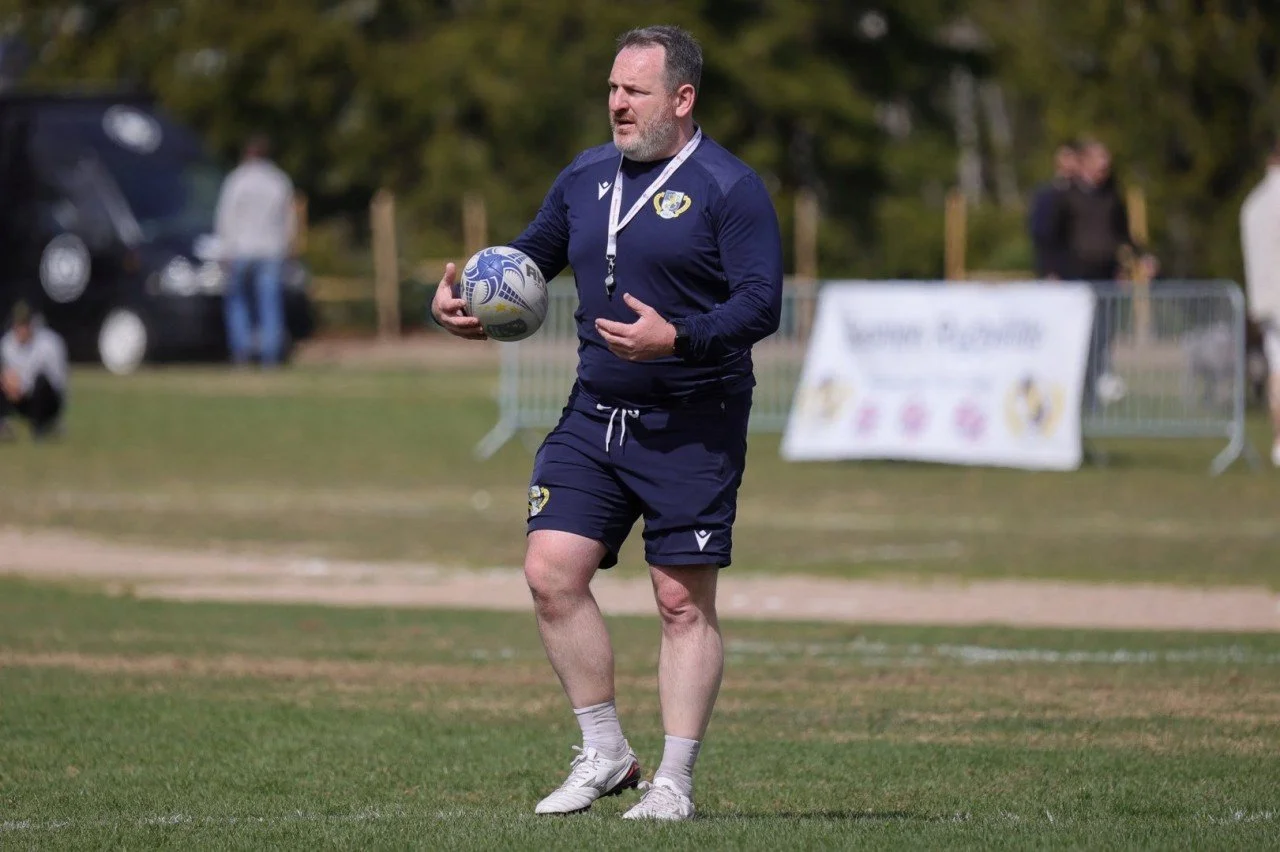
Stuart Edwards: Building Finland Rugby and Tackling Coaching’s Invisible Load
Stuart Edwards discusses his rugby coaching journey, his work with the Scarlets pathway, becoming Finland head coach, and his mission to improve coach wellbeing through.
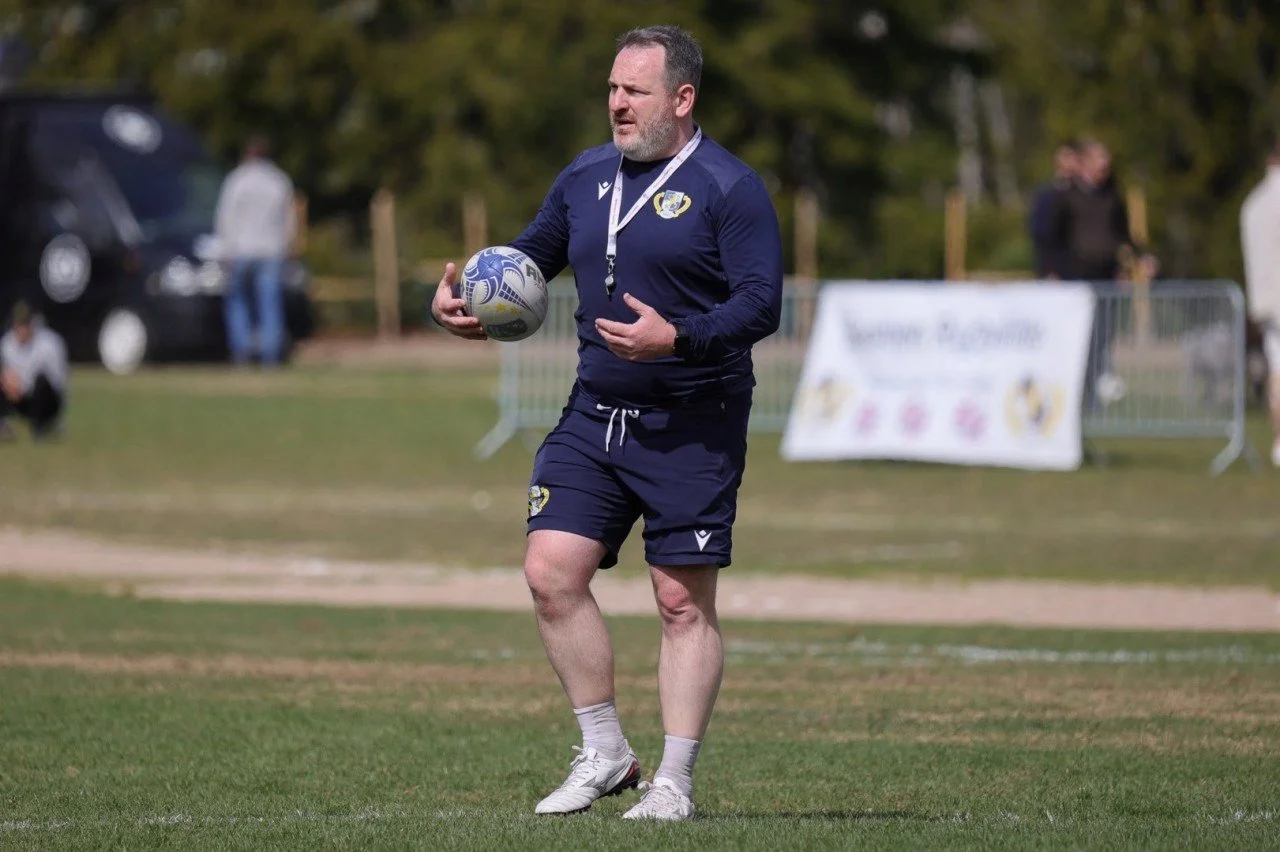
Photo credit: Laura Helminen
“Rugby, to me, means connection. It’s about making lifelong friends, having a sense of belonging and being part of something that is always there for you.
“Wherever you go in rugby, there are people who welcome you in, and I think that’s one of the most special things about the game. Results and performances matter, of course, but ultimately, it’s the relationships you build and the people you meet that stay with you.
“For me, rugby has always been a place where you can feel that you belong.”
Rugby is a massive part of Stuart Edwards’ life. He is a person with a fascinating story in the game.
Scarlets
Edwards has gained a wealth of experience in different environments. He spent a big part of his coaching journey in West Wales with the Scarlets.
“I’ve really enjoyed working within the Scarlets pathway, particularly through the Dewar Shield and Emerging Player Pathway.
“I have a real passion for player development, so working with young players at such an important stage of their journey has been hugely rewarding. You’re helping them develop technically and tactically, but you’re also watching them grow in confidence and begin to understand what it takes to progress.
“One of the most rewarding parts of coaching is seeing players you’ve worked with move on to the next stage. You might only play a small part in their journey, but seeing that progression is incredibly satisfying.
“The Scarlets region has such a strong rugby identity and a proud tradition of producing players, so having the opportunity to contribute to that pathway and help develop the next generation has been a great experience.”
There are many interesting points to take from the quote above. Edwards’ vision goes beyond simply winning matches. It is about developing people as well as players, creating an environment where they can grow and establishing an identity that everyone can be proud to represent. He will look to instil those values while coaching Finland.
Finland
“It came about through a bit of initiative and a bit of good fortune.
“I met Andy Barlow, who was Head Coach at the time, on a mentoring course and we kept in touch afterwards. I eventually reached out to ask whether there might be an opportunity to get involved, and he was kind enough to give me the chance to experience coaching at international level.
“I’ve spent the last two years as part of the Finland coaching setup as an assistant coach, helping to deliver the game model and coaching sessions. During that time, I’ve built some brilliant relationships with the players, learned a lot about Finnish culture and really tried to embrace the language and the environment.
“When the Head Coach role became available, I went through a rigorous interview process and was fortunate to be trusted with the position. I’m incredibly honoured to take on the role and build on the great work that has already been done.”
New nations are emerging in world rugby, and Edwards will look to help Finland make major steps in their journey. It’s a job that holds a special place for Edwards and one with a lot of potential.
“I have a very close personal connection to Finland because my partner, Maria, is from Oulu, so that makes it even more meaningful.
“I’m genuinely excited about what we can build. There’s a lot of potential, and I’m really looking forward to seeing how far we can take it.”
Coaching is a major part of Edwards’ story, but he has gone a step further, looking into the wellbeing of coaches.
An important mission
“I think it’s hugely overlooked, and that’s really what drove me to start researching this area in the first place.
“We quite rightly invest a huge amount in player welfare, wellbeing and performance, but the coach is often the person expected to hold everything together. They’re managing players, staff, selection decisions, results, expectations, relationships and organisational pressures, often alongside pressures outside rugby as well.
“One of the ways I describe it is that coaches can become the emotional shock absorbers of their environment. Pressure comes down from organisations and senior leaders, up from players and staff, across from colleagues, and in from supporters, families and the wider game.
“The coach absorbs much of that, tries not to pass it on, and often carries it away with them.
“That’s what I mean by The Invisible Load. It’s everything people don’t necessarily see: the thinking after training, difficult conversations, responsibility for others, uncertainty, emotional labour, difficulty switching off and that constant feeling that somebody needs something from you.
“Through my research, I’ve had the opportunity to listen to coaches from grassroots rugby right through to the international game. The pressures may look different at each level, but the emotional load is very real.
“That research became the foundation for my book, The Invisible Load – Pressure, Stress and Sustainable Coaching in Rugby Union. I wanted to give a voice to something coaches experience but often feel they have to carry quietly. It also led to the creation of Coach Wellbeing Initiative.
“What excites me now is moving beyond simply talking about the problem and creating practical change. Coach wellbeing shouldn’t be an additional welfare issue or something we only discuss when somebody reaches crisis point. It should sit alongside technical, tactical and performance development as a fundamental part of supporting coaches.
“Coaches spend so much of their time looking after everybody else. We need to become much better at looking after the coach as well.”
It is an important aspect of the game that sometimes gets overlooked. Edwards talks about how rugby can address this.
“The biggest change is moving coach wellbeing from something reactive to something proactive.
“Too often, support only becomes visible when a coach is already struggling, burnt out or at crisis point. By then, the invisible load may have been building for months or even years.
“Wellbeing needs to become part of normal coach development rather than something separate from it. That means organisations need to take greater responsibility for the environments they create. We should educate coaches about stress, emotional load, recovery, boundaries and sustainable practice in the same way we educate them about tactics, technical development and performance.
“We also need to recognise that coaches can become the emotional shock absorbers of the system. If we know they’re absorbing pressure from players, staff, parents, boards, governing bodies, supporters and performance expectations, then we have a responsibility to put proper support around them.
“Confidentiality is a huge part of that. Coaches need somewhere they can speak honestly without worrying that doing so will affect their employment, progression or how they’re perceived. Regular check-ins, mentoring, peer support and access to independent wellbeing support could make a real difference.
“We also need to understand workload properly. It isn’t just the hours spent on the training field. It’s preparation, analysis, travel, communication, difficult conversations, decision-making and the constant mental engagement that continues long after training has finished.
“Culturally, we also need to move away from the idea that resilience means simply coping with everything in silence.
“That’s one of the reasons I created Coach Wellbeing Initiative. I want to help move the conversation from awareness into practical action and, ultimately, work alongside coaches, clubs, governing bodies and sporting organisations to embed wellbeing into coach education, development pathways and everyday practice.
“A young grassroots coach entering the game should learn how to look after themselves as part of becoming a coach. Equally, somebody coaching professionally or internationally should have meaningful, confidential support around them throughout their career.
“We spend so much time asking how coaches can improve players and improve performance. We also need to ask: what are we doing to make sure the coach can thrive too?”
As previously stated, Edwards has experienced a lot; he talks about the lessons he has learned along the way.
Lessons and the future
“The biggest lesson I’ve learnt is probably that relationships matter more than anything.
“When you start in coaching, it’s easy to become consumed by tactics, results, qualifications and trying to prove yourself. Over time, I’ve realised that your biggest impact comes through the way you treat people, the trust you build and the environment you create.
“I’ve also learnt that your career is never going to be a straight line. There will be setbacks, disappointments and periods when things don’t go the way you expected. What matters is what you take from those experiences and whether you allow them to make you better.
“Some of the most difficult periods in my own journey have probably taught me the most. They’ve made me more reflective, more empathetic and much more conscious of the person behind the coach or player.
“I’ve also learnt not to measure success purely by titles, positions or wins and losses. Success can be seeing a young player progress, helping another coach develop, creating an environment where people enjoy coming to training, or simply knowing you’ve had a positive influence on someone.
“If I had to reduce it to one thing, it would be this: invest in people, keep learning and don’t let setbacks define you.”
All the lessons along the way have helped Edwards grow. It will be fascinating to see what the future holds for the coach.
“My ambitions sit across two areas that increasingly complement each other: coaching and coach wellbeing.
“From a coaching perspective, I’m incredibly excited about Finland. I want to help build something sustainable, develop the players and coaches around the national team, strengthen the identity of Finnish rugby and see how far we can take the programme.
“I’m ambitious as a coach. I want to keep learning, developing and challenging myself at the highest level I can.
“But I’ve also become very clear about what I want to achieve away from the pitch.
“Through my research, The Invisible Load, and now Coach Wellbeing Initiative, I genuinely believe there’s an opportunity to change how we think about and support the people who coach our game.
“I’d love to see Coach Wellbeing Initiative grow into an organisation working across sport, from grassroots clubs to professional environments, governing bodies and coach education programmes, providing research, education, workshops, resources and meaningful support.
“Ultimately, I want coach wellbeing to become embedded within coach development rather than treated as an optional extra. When somebody starts their coaching journey, understanding their own wellbeing, recognising the invisible load and learning how to manage the emotional demands of the role should be considered just as important as learning how to plan a session or develop a game model.
“I also want to continue the research because I think we’re only beginning to understand the psychological and emotional demands placed on coaches. The book was never intended to be the end of the project. In many ways, it’s the beginning.
“If, in years to come, we can say that coaches from grassroots through to professional and international sport are better educated, better supported and no longer simply expected to act as the emotional shock absorbers of their environments, then I’ll feel we’ve achieved something meaningful.
“I still have ambitions within coaching, absolutely, but I also want to leave the coaching environment better than I found it.”
The beauty of Edwards’ journey can’t be measured simply in wins and losses. It is found in the relationships he has built, the people he has helped develop and the positive impact he continues to make along the way.
Curious about who’s behind the content? Check out our About Us page or visit our Join The Team page to get involved.