
Forged on Ice: The Rise of Para Ice Hockey
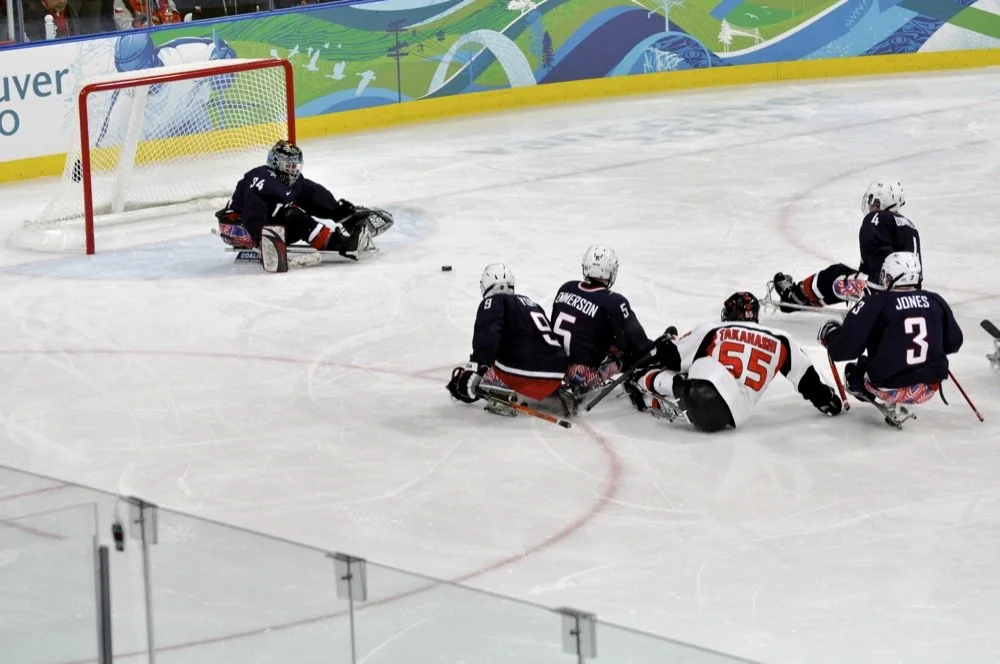
Credit: Mariska Richters
When you think about hockey, the NHL comes to mind. Teams such as the New York Rangers, Toronto Maple Leafs, and the Florida Panthers—franchises that are synonymous with the game. Yet, with the Winter Olympics rapidly approaching, the international game will look to showcase what it’s all about.
However, it’s not just the Winter Olympics that will be taking place, but also the Paralympics. Para sports are vital as they provide a platform for athletes to showcase their abilities in a sporting context. Para ice hockey is one of the events in the Games. It is a sport that is tremendous entertainment that is gearing up to write a new chapter in the upcoming Winter Paralympic Games. Para ice hockey is an entertaining game that has a great history; let’s explore it.
The Start of Para Ice Hockey
Para ice hockey is a sport of speed and intensity, driven by athletes with a desire to play the game they love. The game was brought to life by a group of individuals in the 1960s at a rehabilitation centre within the Swedish capital. It was born out of a desire not to let their physical disabilities stop them from playing the sport they loved. The game is played on a frozen surface, with players using a metal sledge mounted on two ice hockey blades. The design allows the puck to slide underneath the sledge. The rules are similar to ice hockey. A few modifications accommodate the players’ impairments. By 1969, Stockholm had its own five-team league and held the first international match, facing a team from Oslo. Foundations had been established, but they began to blossom throughout the 1970s and 1980s.
Going into the Paralympics
During the 1970s and 1980s, the game swept through Scandinavia, where Sweden and Norway showcased it on stages as grand as the inaugural 1976 Winter Paralympics. In the following years, the game expanded to the global stage, a testament to the determination and skill of the athletes. The likes of Great Britain, Canada, the USA, Japan, and Estonia formed teams, establishing a worldwide presence. 1994 marked the year when para ice hockey became a Winter Paralympic event. It has been a consistent feature ever since. Two years later, the inaugural World Championships took place, and in 2025, the first Women’s World Championships were held. It is an electrifying sport with many memorable and inspiring moments.
The game’s greats
There are too many sensational athletes to name when looking at the greats of the game. Of course, trailblazers such as Britt Mjaasund Oeyen and Rolf Johansson made a massive impact on the sport. U.S. goalie Steve Cash is regarded as one of the sport’s finest—a four-time Paralympic champion who built a stellar reputation for defending the goal with fierce consistency.
Lena Schroeder is a phenomenal player who competed at the PyeongChang Games and is a member of the Norwegian Women’s National Team. Declan Farmer has consistently made an impact on the ice. The American secured the 2018 Paralympic MVP. He also scored the overtime (OT) golden goal in the tournament to clinch the gold medal. More recently, he won the MVP award at the World Championships. For the USA’s Kelsey DiClaudio, greatness has been a constant companion. She lit up the 2014 Women’s International Cup with 23 points. More than a decade later, she stood out at the 2025 Women’s World Championships as MVP and top scorer. DiClaudio has become a defining figure in the sport.
This quote from Brianna Hennessy highlights just how important the Paralympics is: “The Paralympics means so much more because everyone here has a million reasons to give up, and we've all chosen to just go on... It's a bigger picture than the medals, it's a bigger picture than our country's flag. It's all of us coming together on that world stage and representing something greater than ourselves.”
The past is proud, the present is fierce, and the future of para ice hockey looks unstoppable.
Curious about who’s behind the content? Check out our About Us page or visit our Join The Team page to get involved.